 2cb4ad7953
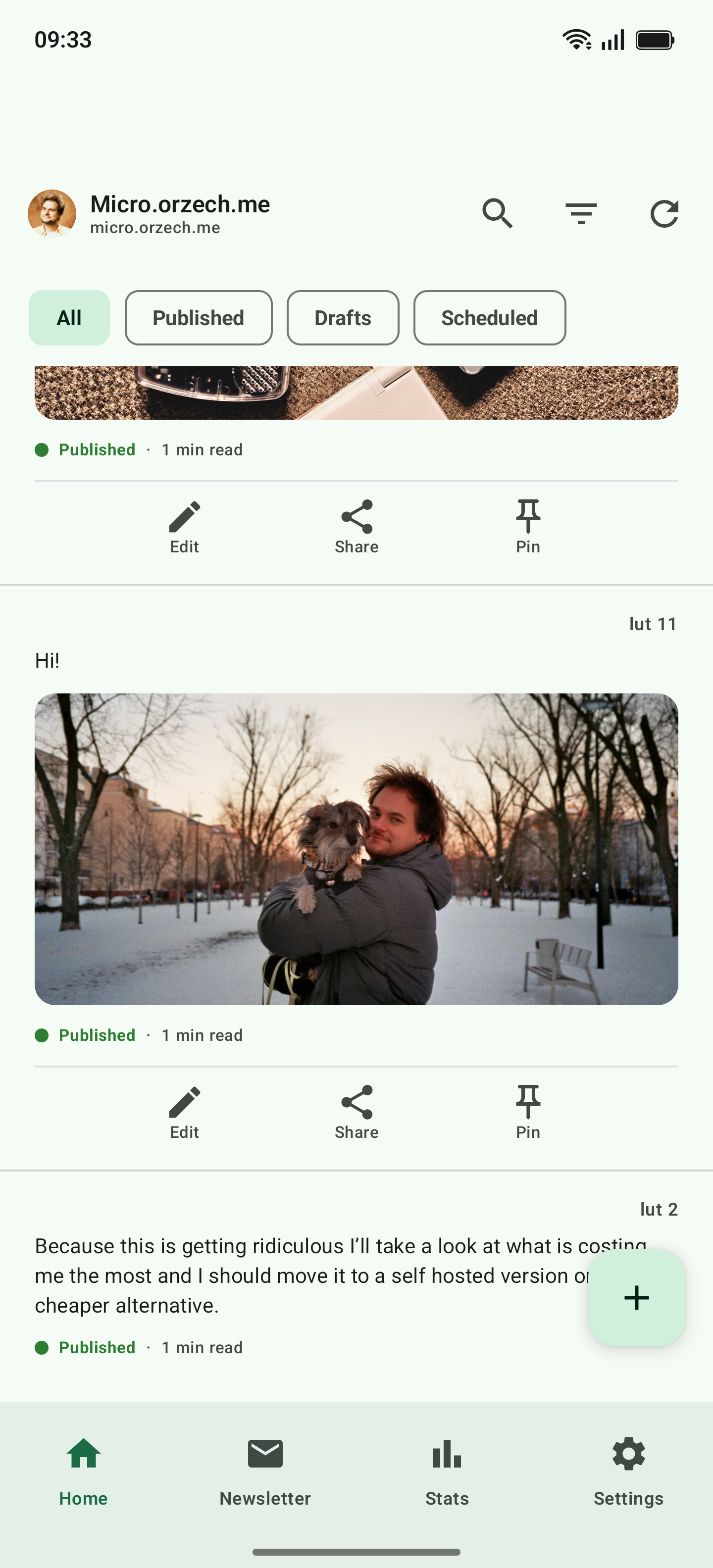
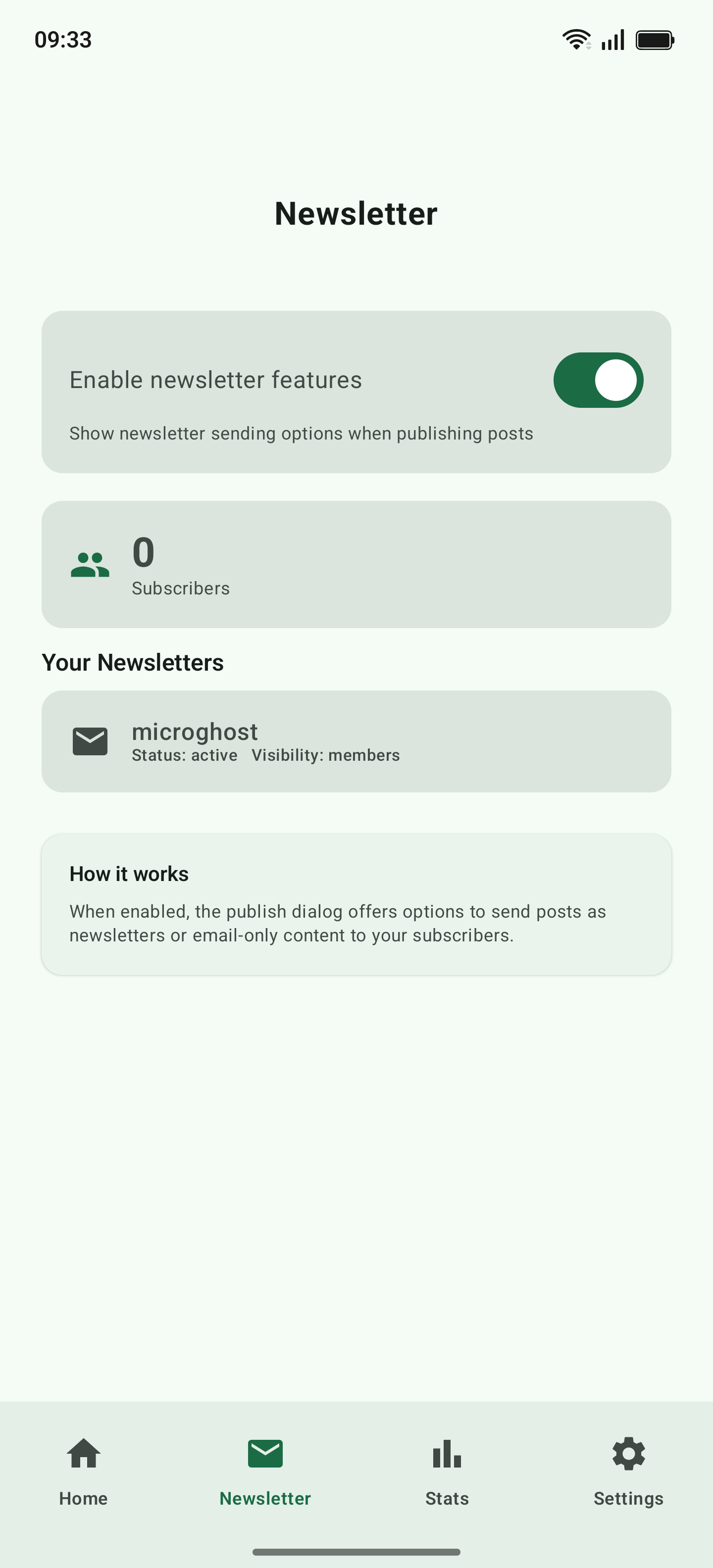
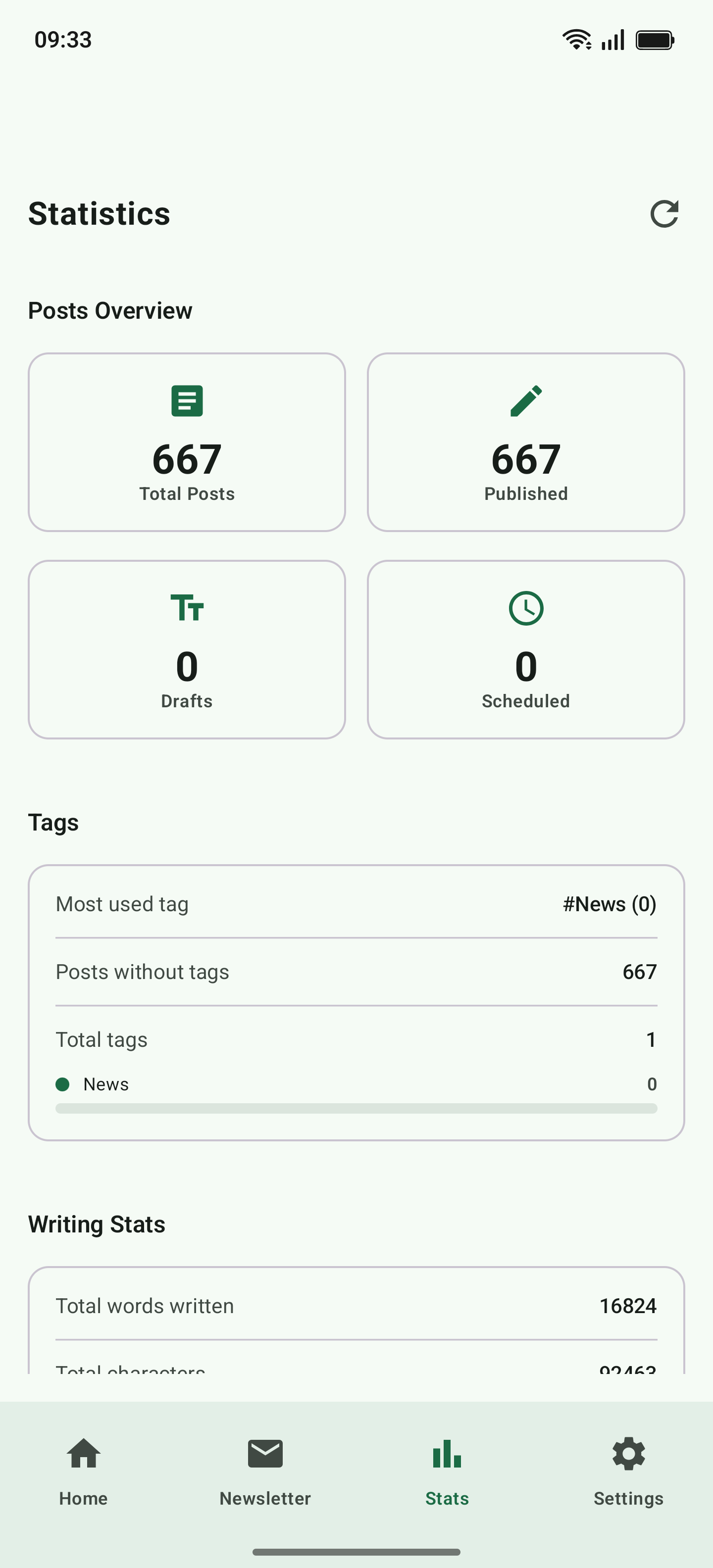
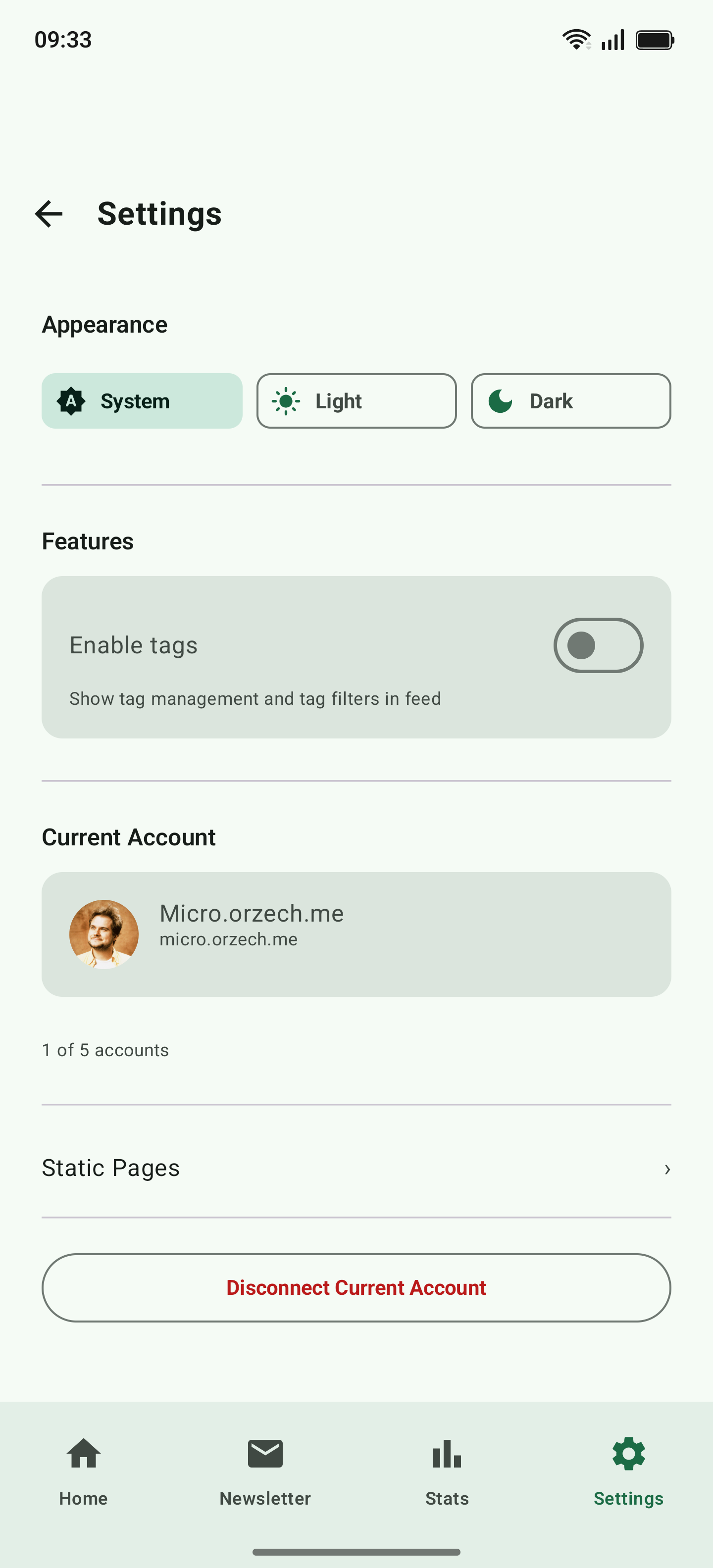
Add app screenshots (feed, stats, newsletter, settings) and update
README and CLAUDE.md to reflect v0.3.0 changes: newsletter integration,
static pages, members management, tag management, pin posts, 4-tab
bottom nav, 31 test classes, and Media3 in tech stack.
6.3 KiB
Swoosh
A native Android microblogging client for Ghost CMS. Write, publish, and manage short-form posts from your phone — with offline support, image uploads, link previews, and scheduled publishing.




Screenshots
Features
- Ghost Admin API — Full integration via JWT authentication (HS256)
- Offline-first — Posts are saved locally and synced when connectivity returns
- Multi-account — Connect up to 5 Ghost blogs and switch between them
- Image uploads — Attach photos from your gallery or camera
- Link previews — Automatic Open Graph metadata extraction (title, description, thumbnail)
- Hashtag support — Auto-extracted hashtags converted to Ghost tags
- Scheduled publishing — Set a future publish date for your posts
- Pin posts — Feature/pin important posts to the top of your blog
- Newsletter integration — Send posts as newsletters to your Ghost subscribers
- Members management — View and manage your Ghost blog members
- Static pages — Create, edit, and manage Ghost pages from the app
- Tag management — Browse, create, and manage tags with per-tag post counts
- Statistics dashboard — Post counts, word counts, reading time, tag breakdown, and more
- Search & filtering — Filter by status (Published, Draft, Scheduled) and sort by date
- Mobiledoc format — Native Ghost content format with text paragraphs and bookmark cards
- Encrypted credentials — API keys stored with AES-256-GCM via AndroidX Security
- Background sync — WorkManager handles upload queue with exponential backoff
- Material 3 UI — Clean, green-tinted design with polished animations and Light/Dark/System themes
Architecture
MVVM with Repository pattern, single-module Gradle project.
com.swoosh.microblog/
├── data/
│   ├── api/            # Retrofit client, JWT auth, interceptors
│   ├── db/             # Room database, DAOs, type converters
│   ├── model/          # GhostPost (API), LocalPost (DB), FeedPost (UI), PostStats, GhostAccount
│   └── repository/     # PostRepository, OpenGraphFetcher
├── ui/
│   ├── animation/      # SwooshMotion shared animation specs
│   ├── components/     # Reusable composables (dialogs, placeholders)
│   ├── composer/       # Post creation with images, links, hashtags, scheduling
│   ├── detail/         # Full post view with pin toggle
│   ├── feed/           # Post feed with search and filtering
│   ├── members/        # Ghost members/subscribers management
│   ├── newsletter/     # Newsletter configuration and subscriber info
│   ├── pages/          # Static pages CRUD
│   ├── preview/        # HTML post preview
│   ├── settings/       # App settings, account management, theme toggle
│   ├── setup/          # Configuration wizard and add-account flow
│   ├── stats/          # Statistics dashboard with animated counters
│   ├── tags/           # Tag management
│   ├── navigation/     # Compose Navigation with bottom nav bar
│   └── theme/          # Material 3 theming (Light/Dark/System)
└── worker/             # PostUploadWorker (WorkManager)
Data flow: Compose UI → ViewModel → Repository → Room (local) + Retrofit (remote). Posts are persisted to Room first, then queued for upload via WorkManager.
Navigation: Bottom bar with four tabs — Home (Feed), Newsletter, Stats, and Settings. Composer, Detail, Pages, Members, and Tags screens slide in as overlays.
Getting started
Prerequisites
- Android Studio Hedgehog (2023.1.1) or later
- JDK 17
- Android SDK 34
- A Ghost blog with Admin API access
Ghost setup
- In your Ghost admin panel, go to Settings → Integrations
- Create a new Custom Integration
- Copy the Admin API Key (format:
id:secret) - Note your Ghost blog URL (e.g.
https://yourblog.com)
Build and run
git clone https://github.com/nicekid1/Swoosh.git
cd Swoosh
./gradlew assembleDebug
Install the debug APK on your device or emulator, then follow the setup wizard to connect your Ghost blog.
Building
./gradlew assembleDebug          # Debug APK
./gradlew assembleRelease        # Release APK (ProGuard enabled)
Testing
The project includes unit tests with JUnit 4 and Robolectric:
./gradlew test                   # Run all tests
./gradlew app:testDebugUnitTest  # Debug variant only
31 test classes covering JWT generation, mobiledoc building, URL normalization, data model serialization, auth interceptors, time formatting, hashtag parsing, account management, feed preferences, newsletter preferences, member models, and theme modes.
Tech stack
| Layer | Technology |
|---|---|
| UI | Jetpack Compose, Material 3 |
| Navigation | Compose Navigation |
| Architecture | MVVM, StateFlow, Repository pattern |
| Networking | Retrofit 2, OkHttp 4 |
| Images | Coil |
| Media | Media3 ExoPlayer |
| Database | Room |
| Background | WorkManager |
| Auth | JJWT (HS256), EncryptedSharedPreferences |
| Link parsing | Jsoup |
| Testing | JUnit 4, Robolectric, MockWebServer |
Contributing
Contributions are welcome! Please see CONTRIBUTING.md for guidelines.
License
This project is licensed under the PolyForm Noncommercial License 1.0.0 — you can use, modify, and share it for any non-commercial purpose. Commercial use requires permission from the author.
Author
Paweł Orzech — pawelorzech.pl